Walking the Brooklyn Bridge: How to Plan the Perfect Brooklyn-Focused Tour
Few city experiences feel as iconic as walking the Brooklyn Bridge. But while many people start in Manhattan, some of the most memorable views, photos, food, and neighborhood discoveries happen when you treat it as a Brooklyn Bridge tour from the Brooklyn side.
This guide explores how to tour the Brooklyn Bridge with a Brooklyn focus: where to start, what you’ll see, how to plan your route, and how to make the most of nearby neighborhoods like DUMBO and Brooklyn Heights.
Why Start Your Brooklyn Bridge Tour in Brooklyn?
Beginning on the Brooklyn side gives a different perspective than the classic Manhattan-first route.
Key reasons many visitors and locals choose a Brooklyn-first tour:
- Skyline views build as you walk – Manhattan gradually comes into full view as you cross.
- Easier access to waterfront parks – Brooklyn Bridge Park and nearby piers are right at your feet.
- Charming neighborhoods right off the bridge – Historic streets, brownstones, and cobblestones sit just minutes away.
- Great pre- or post-walk food options – From casual pizza slices to sit-down waterfront dining.
Walking from Brooklyn toward Manhattan often feels more cinematic: the skyline in front of you, the bridge cables framing your photos, and the river stretching on both sides.
The Best Starting Points on the Brooklyn Side
There are two main access points most people use for a Brooklyn Bridge tour from Brooklyn. Both are walkable from popular Brooklyn sights.
1. Brooklyn Bridge Entrance at Tillary Street
This is one of the most direct entrances to the pedestrian walkway.
What to know:
- Located near Tillary Street and Adams Street in Downtown Brooklyn.
- Feels a bit more “urban” and less touristy at the beginning.
- Ideal if you are already exploring Downtown Brooklyn or arriving by subway to Borough Hall, Jay St–MetroTech, or nearby stations.
From this entrance, you follow a ramp up to the bridge’s elevated pedestrian path. Once you’re on the walkway, the city noise drops slightly and the views start to open up.
2. Brooklyn Bridge Entrance at Washington Street / Prospect Street (DUMBO Area)
This route lets you soak in DUMBO before you even step onto the bridge.
Highlights of this entrance:
- Close to the neighborhood’s famous cobblestone streets.
- Easy to combine with Brooklyn Bridge Park, the waterfront, and the well-known Manhattan Bridge photo spot on Washington Street.
- Feels more scenic and leisurely than the Tillary Street approach.
From the DUMBO area, you can follow signs and local pedestrian paths leading up to the Brooklyn Bridge ramp, then join the main walkway.
What You’ll See on a Brooklyn Bridge Walking Tour
The bridge is more than just a structure connecting boroughs. It offers layers of architecture, engineering, skyline views, and river scenery as you walk.
The Structure and Design
As you walk, you’ll notice:
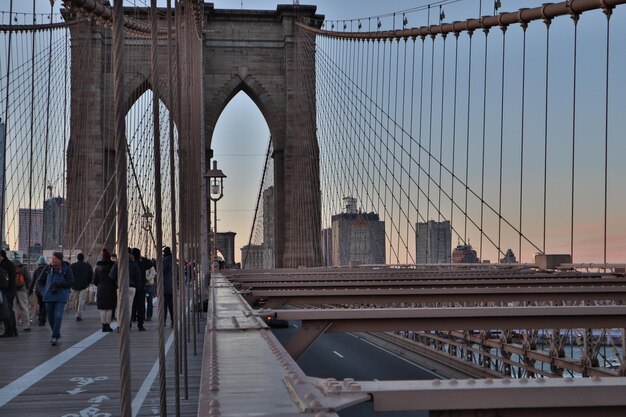
- Gothic-style stone towers with their pointed arches.
- A web of steel cables forming geometric patterns that show up beautifully in photos.
- A wooden plank walkway (for pedestrians and cyclists, though cycling rules change over time and may be shifted to separate lanes or paths).
The Brooklyn Bridge combines historic stonework with modern traffic flow, which is why it’s often described as both a landmark and a functional transportation route.
Skyline and River Views
Walking from Brooklyn toward Manhattan reveals:
- Lower Manhattan skyline: One World Trade Center and surrounding towers.
- East River activity: Ferries, boats, and sometimes larger ships passing underneath.
- Other bridges: The Manhattan Bridge is clearly visible, and farther along, the Williamsburg Bridge can often be seen upstream.
On clearer days, the combination of sunlight, water reflections, and skyscrapers makes for especially striking views.
Route Overview: A Step-by-Step Brooklyn Bridge Tour (Brooklyn to Manhattan)
Here is a simple way to structure your Brooklyn Bridge tour starting in Brooklyn and ending in Manhattan.
Step 1: Explore the Brooklyn Side Before You Climb
Before you step onto the bridge, many visitors spend time nearby:
- DUMBO: Trendy shops, galleries, and industrial-style architecture.
- Brooklyn Bridge Park: Lawns, piers, and waterfront walkways with striking skyline views.
- Brooklyn Heights Promenade: Classic views of Lower Manhattan and the harbor.
This pre-walk wandering helps you see the bridge not just as a crossing, but as part of a larger Brooklyn waterfront experience.
Step 2: Join the Pedestrian Walkway
Follow signs for Pedestrians / Brooklyn Bridge. Once you reach the pedestrian entrance:
- Stay in the designated pedestrian lane where marked.
- Be aware of bikes or separate cycling lanes if they are active in your section.
- Expect a gradual incline as you approach the main span.
Traffic patterns and lane markings can change over time, but the general principle is to keep to the appropriate side and move steadily while allowing others to pass.
Step 3: Pause at the Central Span
The midpoint — near the towers and viewing areas — is where many people stop to:
- Take photos looking back at Brooklyn and forward to Manhattan.
- Capture close-ups of the stone arches and cables.
- Look down at the vehicles moving beneath the walkway.
This central area is often busier, so many visitors move to the sides to pause rather than stopping in the narrow center of the path.
Step 4: Continue Toward Manhattan
As you walk downhill into Manhattan:
- The buildings grow larger and the skyline fills your field of view.
- The path merges eventually with City Hall Park and the Civic Center area.
- From here, it’s walking distance to neighborhoods like Chinatown, the Financial District, and Tribeca.
Many people end their official “tour” at City Hall Park, then choose a nearby neighborhood for food or further exploring.
When to Walk the Brooklyn Bridge from Brooklyn
Timing can dramatically change your experience.
Early Morning
- Pros: Fewer crowds, gentler light for photos, cooler temperatures in warmer months.
- Atmosphere: Calmer, more local feel as commuters start their day.
Midday
- Pros: Strong visibility and bright photos, easier to see details of the bridge structure.
- Considerations: Higher foot traffic, stronger sun, limited shade on the walkway.
Late Afternoon & Sunset
- Pros: Warm light, colorful sky, city lights turning on as you walk.
- Atmosphere: Often lively with both visitors and locals enjoying the views.
After Dark
- Pros: Illuminated skyline, bridge lights, reflections on the river.
- Considerations: Different crowd dynamics; some people may prefer walking with a group at night.
The bridge is generally considered a busy urban public space, so conditions can change quickly based on weather, events, and time of year.
Exploring Brooklyn Before or After Your Bridge Tour
A Brooklyn Bridge tour feels more complete when you pair it with nearby Brooklyn neighborhoods.
DUMBO (Down Under the Manhattan Bridge Overpass)
Just beneath and around the bridges, DUMBO is known for:
- Industrial-chic buildings converted into boutiques, cafes, and creative offices.
- The classic Manhattan Bridge “Instagram” view from Washington Street.
- Waterfront spaces where you can sit on benches, walk along the river, or watch the ferries.
It’s easy to spend a few hours here before heading up to the bridge.
Brooklyn Heights
A short walk from the bridge entrances, Brooklyn Heights offers:
- Tree-lined streets and brownstones that give a quieter, residential feel.
- The Brooklyn Heights Promenade, with elevated views of the harbor and skyline.
- A mix of small shops and eateries on nearby commercial streets.
The neighborhood contrasts nicely with the busier areas near the bridge.
Brooklyn Bridge Park
Stretching along the East River, this park features:
- Lawns, piers, sports fields, and playgrounds.
- Various vantage points of both the Brooklyn and Manhattan Bridges.
- Seasonal activities and changing installations, depending on the time of year.
For many visitors, sitting in the park and looking up at the Brooklyn Bridge is just as memorable as walking across it.
Self-Guided vs. Guided Brooklyn Bridge Tours (Brooklyn Start)
People generally choose between exploring independently or joining an organized tour.
Self-Guided Walking Tour
A self-guided Brooklyn Bridge tour offers:
- Flexibility: Walk at your own pace, stop for photos, detour into neighborhoods.
- Customization: Combine the bridge with other Brooklyn or Manhattan landmarks however you like.
- Cost control: No tour ticket required; you decide how to spend on food, attractions, and extras.
Some visitors prepare with printed maps or saved phone notes listing key viewpoints and photo spots so they can move through the route smoothly.
Guided Group or Private Tours
Some companies organize Brooklyn Bridge tours starting in Brooklyn, often including:
- Commentary on history, architecture, and local stories.
- Pre-planned routes through DUMBO, Brooklyn Heights, or Lower Manhattan.
- Group or private formats depending on the provider.
These tours may appeal to people who enjoy structured storytelling, have limited time, or prefer having logistics handled by a guide.
Practical Tips for a Smooth Brooklyn Bridge Walk
Here is a compact overview of key practical considerations:
| ✅ Tip Area | 🔍 What to Keep in Mind |
|---|---|
| Footwear | Wear comfortable, closed-toe shoes suited for walking and standing on wooden planks. |
| Weather | The bridge is exposed to wind, sun, and rain; layers and sun protection can be useful. |
| Crowds | Expect more people on weekends, holidays, and peak daylight hours. |
| Photos | Step to the side of the walkway when stopping to take pictures. |
| Safety awareness | Keep personal items zipped, secured, and in front of you in crowded areas. |
| Noise & traffic | You’ll hear vehicle traffic below; this is part of the urban experience. |
| Time flexibility | Allow extra time if you plan to explore DUMBO or Brooklyn Heights before or after. |
Quick Planning Checklist for a Brooklyn Bridge Tour 🧭
Here’s a skimmable list you can use while planning your visit:
🕒 Choose your time of day
- Early morning for fewer crowds
- Sunset for dramatic views
- Daytime for clear structural details
📍 Decide your Brooklyn starting point
- Tillary Street entrance (direct, Downtown Brooklyn)
- DUMBO / Washington Street area (more scenic, near waterfront)
👟 Prepare to walk comfortably
- Comfortable shoes
- Weather-appropriate layers
- Sun protection in warmer months
📸 Plan your must-have views
- From the central span looking both ways
- From Brooklyn Bridge Park and DUMBO
- From Brooklyn Heights Promenade, if you include it
🗺️ Pair the bridge with a neighborhood
- Before crossing: Explore DUMBO or Brooklyn Heights
- After crossing: Explore City Hall Park, Chinatown, or the Financial District
Using a simple checklist like this can make your Brooklyn Bridge tour from Brooklyn feel cohesive rather than rushed.
A Brief Look at the Bridge’s Background
Walking the Brooklyn Bridge becomes more meaningful when you understand a little of its backstory.
- It was one of the earliest major suspension bridges connecting Manhattan and Brooklyn across the East River.
- At the time of its opening, it was considered a remarkable engineering achievement, both for its span and its combination of materials.
- The bridge has endured shifting traffic patterns, evolving city skylines, and countless daily crossings by pedestrians, cyclists, and vehicles.
Knowing that generations of New Yorkers and visitors have walked the same route can add a sense of continuity as you look out over the river.
Making the Most of Your Brooklyn Bridge Experience
A Brooklyn Bridge tour focused on the Brooklyn side gives you more than just a crossing between boroughs. It links:
- Historic neighborhoods like Brooklyn Heights
- Revitalized waterfronts like DUMBO and Brooklyn Bridge Park
- Sweeping skylines and close-up architectural details
Whether you walk independently with a loose plan, follow a self-designed route with specific viewpoints in mind, or join a guided tour that starts in Brooklyn, the bridge can serve as both centerpiece and connector for a rich day of exploration.
By starting in Brooklyn, you allow the Manhattan skyline to unfold in front of you, turning a simple walk into a layered experience of city views, neighborhoods, and riverfront scenery that stays with many visitors long after they leave.
Related Topics
- a Slice Of Brooklyn Tour
- Affordable Tour Brooklyn
- Best Tour Brooklyn
- Bike Tour Brooklyn
- Brat Tour Brooklyn
- Brooklyn Bicycle Tour
- Brooklyn Brewery Tour
- Brooklyn Brewery Tour Brooklyn
- Brooklyn Bridge New York Tour
- Brooklyn Bridge Tour
- Brooklyn Dyker Heights Christmas Lights Tour
- Brooklyn Food Tour
- Brooklyn Food Tour Brooklyn
- Brooklyn Nets Tour
- Brooklyn Pizza Tour
- Brooklyn Street Art Tour Brooklyn
- Brooklyn Tour
- Brooklyn Tour During Festivals
- Brooklyn Waterfront Tour Brooklyn
- Brooklyn Winery Tour
- Food And Drink Tour Brooklyn
- Guided Tour Brooklyn
- Halloween Tour Brooklyn
- Holiday Tour Brooklyn
- New York Brooklyn Bridge Walking Tour